看美剧学英语:怎么看才不是"看了个寂寞"
全程中文字幕刷剧=娱乐。换个看法,美剧才真能变成学英语的利器。

#学习方法#看美剧学英语#字幕#听力#词块
句会了团队
3/22/2026
你将学到:
你是不是也有这样的经历:
问题不在于你不努力,而在于方法错了。
传统的"背单词"方法,是把单词从语境中剥离出来,孤零零地记忆。但真实语言使用中,单词从来不是一个一个出现的,而是成块、成串出现的。
这就是今天要讲的——词块学习法 (Chunking Method)。
词块 (Lexical Chunk),是指经常一起出现、具有固定或半固定形式的词语组合。
母语者在说话时,并不是一个词一个词地组织句子,而是直接调用已经存储好的词块。
❌ 单词思维(大多数中国学习者):
我 → 昨天 → 去 → 了 → 超市 → 买 → 一些 → 水果
I → yesterday → go → ed → supermarket → buy → some → fruit
(脑子里每个词都要翻译、组织,慢且容易出错)
✅ 词块思维(母语者):
I went to the supermarket to buy some groceries.
(直接调用 went to the supermarket + to buy some groceries 两个词块)
单词之间约定俗成的组合,不能随意替换。
| 中文 | ❌ 错误 | ✅ 正确词块 |
|---|---|---|
| 做决定 | make a decision | make a decision (不是 do a decision) |
| 依靠 | rely on | rely on (不是 depend at) |
| 对...感兴趣 | be interested in | be interested in |
| 产生影响 | have an effect on | have an effect on |
| 承担责任 | take responsibility | take responsibility |
常见动词搭配:
动词 + 介词/副词组成的固定短语,意义往往不能从字面推测。
| 词块 | 含义 | 例句 |
|---|---|---|
| look forward to | 期待 | I'm looking forward to seeing you. |
| put up with | 忍受 | I can't put up with this noise anymore. |
| come up with | 想出 | She came up with a great idea. |
| get along with | 与...相处 | Do you get along with your colleagues? |
| run out of | 用完 | We've run out of milk. |
可以填入不同内容的框架结构,写作和口语中直接套用。
| 词块 | 用法 | 例句 |
|---|---|---|
| It is...that... | 强调句 | It is hard work that leads to success. |
| There is no doubt that... | 毫无疑问 | There is no doubt that exercise is good for health. |
| The reason why...is that... | ...的原因是 | The reason why I'm late is that the traffic was terrible. |
| Not only...but also... | 不仅...而且... | Not only did he finish the work, but also he did it perfectly. |
| It is suggested that... | 建议 | It is suggested that you arrive early. |
日常交流中高频使用的固定表达。
| 词块 | 含义 | 例句 |
|---|---|---|
| by the way | 顺便说一下 | By the way, have you seen Tom? |
| as a matter of fact | 事实上 | As a matter of fact, I already knew about it. |
| in my opinion | 在我看来 | In my opinion, this is the best solution. |
| on the other hand | 另一方面 | On the other hand, we need to consider the cost. |
| at the end of the day | ultimately | At the end of the day, what matters is your health. |
心理学家发现,人类短期记忆容量有限(约 7±2 个信息单位)。词块把多个单词打包成一个信息单位,大大减轻记忆负担。
7 个单词 → 1 个词块
"have" + "a" + "look" + "at" → "have a look at"
词块是整体存储、整体提取的,不需要临时组装。
词块是母语者实际使用中的高频组合,掌握了词块,你的英语会更自然、更地道。
选择难度适中、有文本对照的材料:
标准: 你能理解 80% 以上的内容
阅读或听材料时,圈出你想"偷来"的词块。
例句分析:
"I'm looking forward to hearing from you. Please feel free to contact me if you have any questions."
可以标记的词块:
建立自己的词块本(电子或纸质),按场景或功能分类:
📁 工作邮件
- I'm writing to inquire about...
- Please find attached...
- I look forward to your reply.

📁 日常对话
- How's it going?
- Long time no see.
- Let's catch up sometime.

📁 表达观点
- From my perspective...
- I tend to think that...
- It depends on...
每个词块造 1-2 个与自己生活相关的句子。
例如学了 run out of:
关键: 句子要和自己有关,这样记忆更深刻。
找机会在真实场景中使用你学到的词块:
没有输出,词块永远不是你的。
| 工具 | 用途 |
|---|---|
| Anki | 间隔重复记忆词块卡片 |
| Notion | 建立分类词块数据库 |
| 欧路词典 | 收藏生词和例句 |
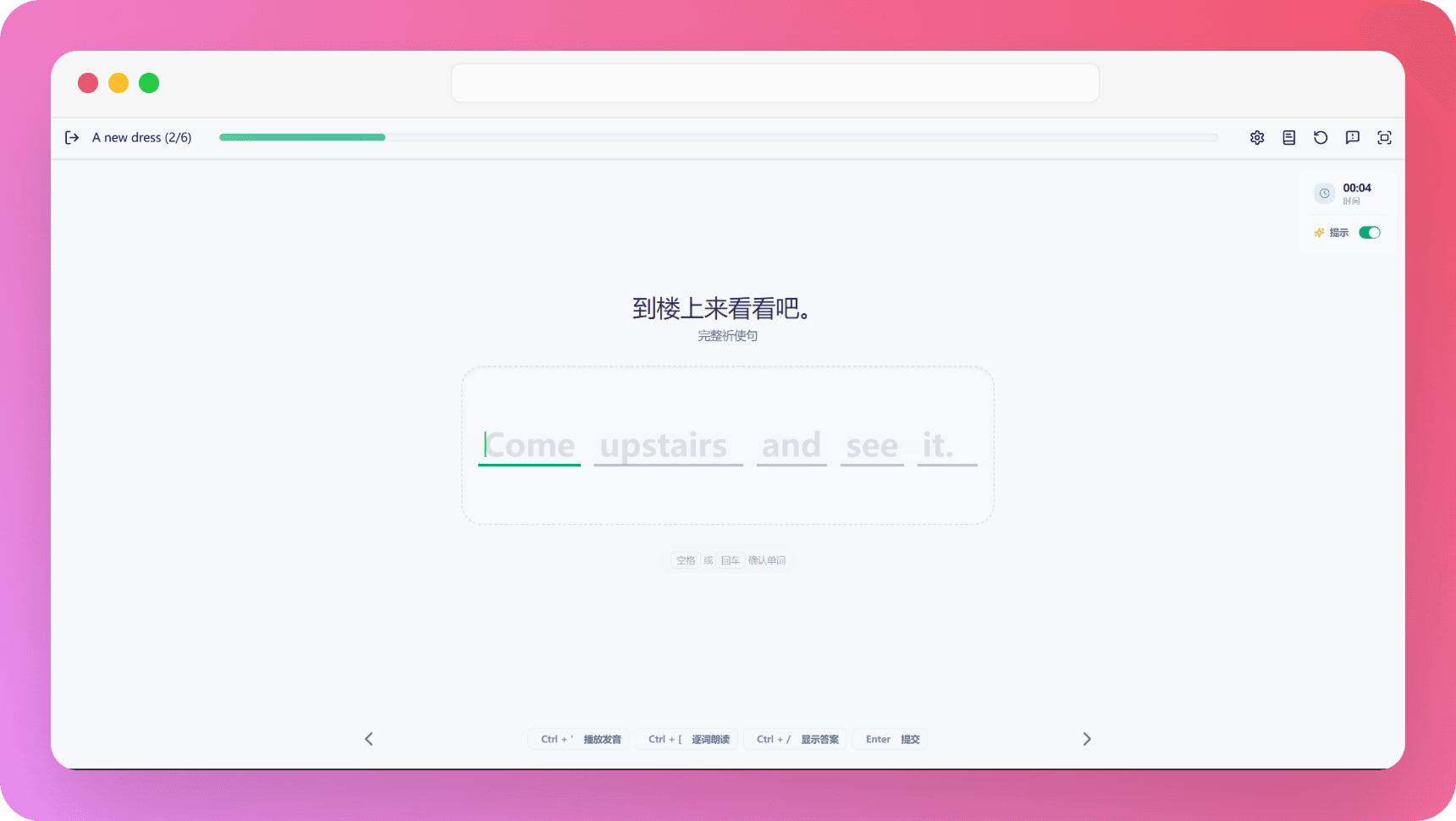
| 句会了 | 连词成句训练,把词块练成肌肉记忆 |
每天 15 分钟,一周就能积累 50+ 词块:
| 时间 | 任务 |
|---|---|
| 早上 5 分钟 | 复习前一天的词块(用 Anki) |
| 中午 5 分钟 | 学习 5 个新词块,造句 |
| 晚上 5 分钟 | 在日记或对话中使用至少 3 个词块 |
词块记在本子上不等于进了脑子。必须定期复习、主动回忆。
解决: 用 Anki 等间隔重复工具,系统安排复习时间。
一天记 50 个词块,一周后忘 45 个。
解决: 每天精学 5-10 个,确保能熟练运用。
孤立地背词块列表,不知道怎么用。
解决: 每个词块必须配合例句 + 自造句。
看了很多,收藏了很多,但从没用过。
解决: 强制自己每天在写作或口语中使用至少 3 个新词块。
词块学习法和连词成句训练是天然搭档:
在句会了中,你可以:
最终目标: 看到中文提示,能脱口而出英文词块;在真实对话中,能自然调用积累的表达。
参考资料: